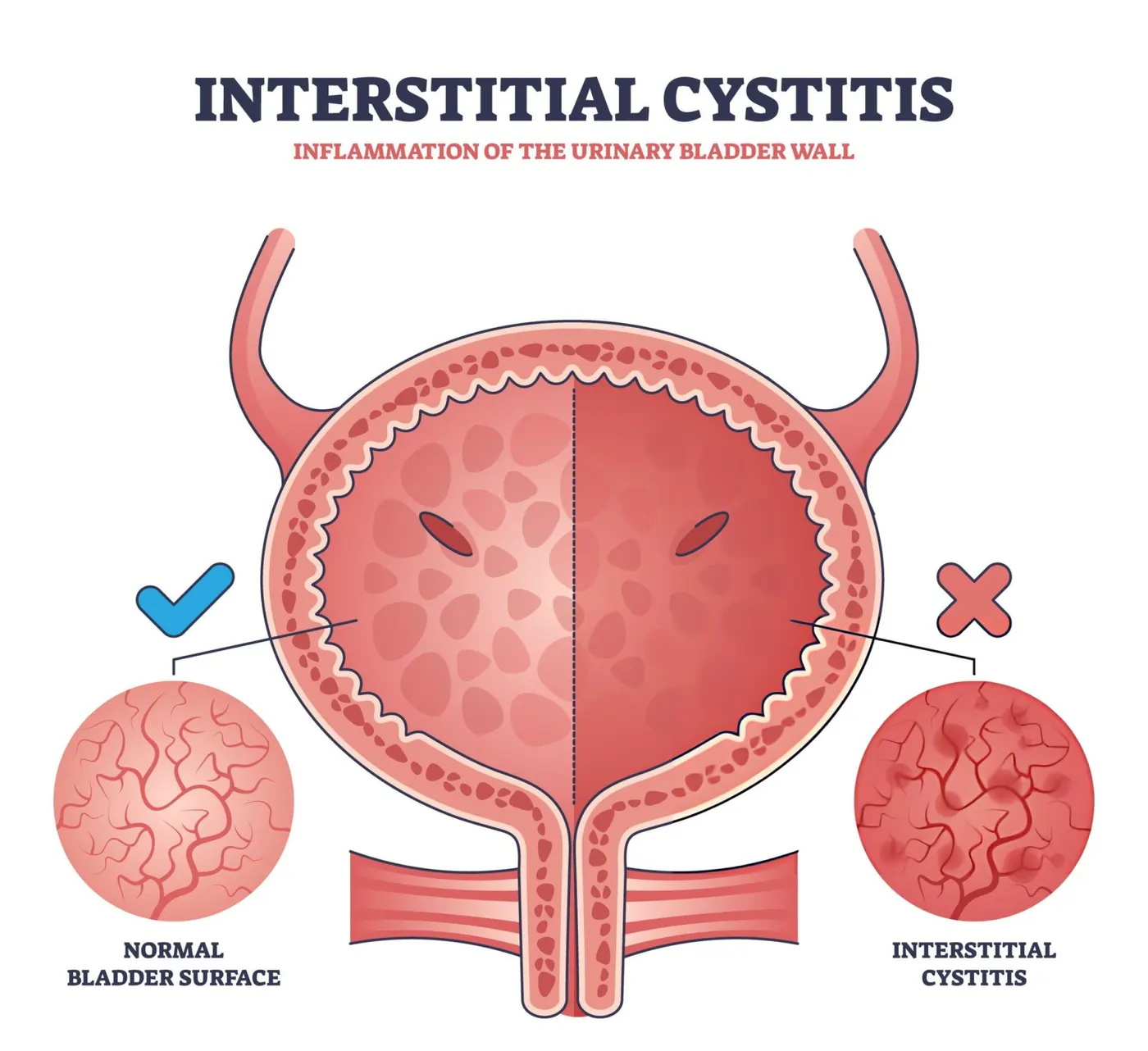
Interstitial cystitis is a condition characterized by chronic pain and discomfort that affects the bladder. It is also called bladder pain syndrome, and not much is known about the condition. There are several theories about its causes, and they span from nerve-related explanations to genetic theories. However, the symptoms of the condition are quite clear. They include pain in the bladder area, increased urinary frequency, and sometimes pain during sex.
Since it causes pain around the bladder region, interstitial cystitis is often associated with other conditions. Some of these conditions cause pain at or around the bladder and are often diagnosed alongside the condition. Some other conditions do not directly cause pain in the affected region but are known to be present in individuals with the condition. Some of them include irritable bowel syndrome and chronic fatigue syndrome.
Like we discussed earlier, there are several theories that attempt to explain what causes interstitial cystitis. While most of them offer plausible explanations, none of them has been proven or generally accepted as the singular cause. However, despite this lack of consensus, these theories can help to understand how the condition works and help to develop appropriate treatments.
One theory suggests that an autoimmune condition is responsible for bladder pain syndrome. This is a little similar to what is seen in other autoimmune disorders like rheumatoid arthritis and systemic lupus erythematosus. In autoimmune conditions, the body’s immune system attacks normal healthy cells, thinking they are antibodies. This theory believes that bladder pain syndrome works the same way and that the immune system attacks the cell in and around the bladder.
Recent research has also shown that people that have bladder pain syndrome have substances in their urine that prevent the growth of the bladder cells. This growth is especially stunted in the bladder’s epithelium. However, the research also shows that stunted growth doesn’t actually cause interstitial cystitis. Rather, infections predispose these people to the condition and the pain that accompanies it.
One theory about the cause of pain in this condition involves the damage of the bladder’s lining. Also called the urothelium, a damaged lining is present in most people with bladder pain syndrome. The theory is that when the surface layer is damaged, by a urinary tract infection, for example, consumption of substances like coffees and sodas can cause urinary chemicals to find their way into the surrounding tissues. This then causes pain.
As mentioned earlier, several conditions are often associated with this syndrome. While some contribute to the pain experienced by individuals that have the condition, some others are simply diagnosed with painful bladder syndrome. The fact that these conditions are usually present in people who suffer from interstitial cystitis makes it more likely that it is caused by some of the factors linked to these other diseases.
Some of the associated conditions include:
In men, painful bladder syndrome is often accompanied by chronic nonbacterial prostatitis.
The majority of symptoms associated with this condition are centered around pain. However, the kind of pain and the frequency of occurrence often vary between individuals. Some of the symptoms include:
Interstitial cystitis was once believed to affect women in menopause. However, recent discovered have confirmed that it affects younger women as well. Studies reveal that the prevalence of interstitial cystitis is between 2.7 Million and 6.5 Million women. For men, between 1.8 Million and 4.2 Million are known to be affected.
Even though the cause of interstitial cystitis is not known, the following factors have been associated with a higher prevalence of the condition
AGE
Most individuals who have this condition are over the age of 30
SEX
Women are more likely to get interstitial cystitis in men.
SKIN AND HAIR COLOR
Even though the relationship is unclear, having red hair and fair skin predisposes you to have painful bladder syndrome
Part of why interstitial cystitis is so difficult to manage is because so little is known about it. Not much is known about its cause or progression. As a result, there is no specific test that can be conducted to confirm the presence or absence of the condition. The diagnosis usually involves analyzing the signs and symptoms and looking at how well they fit the common symptoms associated with the condition.
Some diagnoses are made based on the lack of better explanations. Sometimes, if a person has pain around the bladder, and there are no identifiable causes, the person is diagnosed with painful bladder syndrome, and treated accordingly.
A process involving history taking, physical and neurological examination, and other tests are usually used in diagnosing the condition.
The history involves asking about the symptoms of the disease, including how severe the symptoms are and how long the individual has been experiencing them. The physical exams include examining the abdomen, prostate and rectum. These are done to rule out other conditions like pelvic pain.
Some other tests, like a cystoscopy, can be conducted to look inside the bladder. The test can rule out conditions like cancer. It can also help to determine the extent of inflammation as well as spot ulcers and bladder stones.
Just like with its diagnosis, there is no singular treatment for painful bladder syndrome, since it’s specific cause is unknown. The management of the condition depends on the symptoms that the individual presents with. And since these symptoms often vary from person to person, their treatment approach will also vary. Additionally, if there are other conditions that accompany interstitial cystitis, these are also addressed in the treatment method that’s used.
The treatment of painful bladder syndrome is often divided into five phases
These treatments are divided into phases because they are implemented that way. The phase one treatments go first, and if those fail to alleviate the symptoms, phase two treatments are used, and on it goes.
The first line of treatment includes education and lifestyle modification. A significant amount of interstitial cystitis resolves on its own without external intervention. So at this first phase, the focus is on
Drugs used in this phase include Amitriptyline and Hydroxyzine. Amitriptyline helps control bladder spasms, while Hydroxyzine is an antihistamine that can help regulate the frequency of urination
In this stage, the individual is usually referred to a specialist. Some of the treatments in phase three include neuromodulations therapy in which electrical impulses are delivered to the nerves around the bladder. These can help modify their actions. If the pain is caused by a nerve, this can also help. Bladder ulcers are also cauterized in this phase.
Phase four includes a drug known as cyclosporine. Cyclosporine is an immunosuppressant and is quite effective in treating the symptoms of interstitial cystitis.
Surgery is the final step in managing interstitial cystitis, and it is reserved for individuals whose pain and symptoms have not responded to all the other forms of treatments. The surgery is offered to people who have limited bladder capacity, or experience severe symptoms. The procedure is to divert urine away from the bladder. Most people do not require surgery for the treatment of bladder pain syndrome.
LEARN MORE ABOUT ONGOING CLINICAL STUDIES SPONSORED BY R3 STEM CELL HERE
Brand Ambassador Gallery
Register Now For Free Webinar: Avoid Surgery With Stem Cell Therapy
R3 Stem Cell Master Class
Learn everything you need to know about the ever expanding field of regenerative medicine in this 8 part series that includes over four hours of entertaining content!
R3 Stem Cell International
Free Stem Cell Consultation
R3 Stem Cell offers a no cost consultation to see if you or a loved one is a candidate for regenerative cell therapies including cytokines, growth factors, exosomes, and stem …
Provider
Partnership
The R3 Partnership Program offers providers an all-in-one regenerative practice program including marketing, consultations and booked procedures!
Success Stories
*Outcomes will vary between individuals. No claims are being made with regenerative therapies. The FDA considers stem cell therapy experimental. See our THERAPY COMMITMENT HERE.
The USA Stem Cell Leader Offers Procedures In 7 Countries Including
United States
Mexico
Philippines
South Africa
Pakistan
India
Turkey
Call to schedule your free consultation at over 70 centers world!
R3 Stem Cell is a global leader in regenerative medicine, offering advanced stem cell and exosome therapies through Centers of Excellence in over 45 locations across 7 countries. Our mission is to provide first-rate, customized regenerative treatments, including stem cells, exosomes, PRP, vitamins, and peptides, to help patients achieve a better quality of life. With more than 26,000 procedures performed and an 85% patient satisfaction rate, our experienced, compassionate providers are committed to delivering safe, effective care. All therapies are nonsteroidal, outpatient procedures designed to harness the body’s natural repair mechanisms and support tissue regeneration. Individual results may vary, and only your medical professional can explain all the risks and potential benefits of any therapy based on your unique circumstances.


Stem cell therapy is considered experimental and is regulated by the U.S. Food and Drug Administration (FDA), but it is not FDA-approved. R3 Stem Cell does not offer stem cell therapy as a cure for any medical condition. No statements made on this site have been evaluated or approved by the FDA. This site does not provide medical advice. All content is for informational purposes only and is not a substitute for professional medical consultation, diagnosis, or treatment. Reliance on any information provided by R3 Stem Cell, its employees, others appearing on this website at the invitation of R3 Stem Cell, or other visitors to the website is solely at your own risk. R3 Stem Cell does not recommend or endorse any specific tests, products, procedures, opinions, or other information that may be mentioned on this website. R3 Stem Cell is not responsible for the outcome of your procedure. The FDA considers stem cell therapy experimental at this point.
R3 has treatment centers in 8 countries. In the USA, no claims are made for treating any specific condition. Those are meant for R3 International treatment.


CALIFORNIA
FLORIDA
GEORGIA
HAWAII
IDAHO
ILLINOIS
INDIANA
IOWA
KANSAS
KENTUCKY
LOUISIANA
MARYLAND
MASSACHUSETTS
MICHIGAN
MINNESOTA
MISSISSIPPI
MISSOURI
NEBRASKA
NEW JERSEY
NEW YORK
NEW MEXICO
NEVADA
NORTH CAROLINA
OHIO
OKLAHOMA
OREGON
PENNSYLVANIA
RHODE ISLAND
SOUTH CAROLINA
SOUTH DAKOTA
TENNESSEE
Disclaimer: The city links above provide general information on stem cell treatment. To find an R3 Stem Cell clinic near you click here
The USA stem cell leader offers procedures in
8 Countries including:
Copyright © 2017-2026 R3 Stem Cell. All Rights Reserved.