Call to Schedule Free Consultation at Over 80 Centers Worldwide!
Stem Cell Treatment in Salt Lake City, Utah

At R3 Stem Cell, we offer stem cell therapy in Salt Lake City, UT, as part of regenerative medicine. Our providers may use mesenchymal stem cells (MSCs), which can release repair signals. This therapy is investigational and not FDA approved for most uses, so we review risks, alternatives, and eligibility.

Joint pain has a way of shrinking your world. The trail you used to hike feels too long. A walk around Liberty Park turns into a short loop. You start saying no to things you love.

AtR3 Stem Cell, we help people inSalt Lake City find out if stem cell treatment fits their goals. Our network of providers has done over 30,000 stem cell procedures across the U.S. Every case starts the same way. You get a free consultation, a straight answer about the evidence, and a clear plan.

What Is Stem Cell Therapy?

Stem cell therapy is a branch ofregenerative medicine. It uses cells that can make copies of themselves. These cells also send repair signals to the tissue around them. A provider puts them in one spot, most often with a shot. The goal is to help your body do its own repair work.

Stem cells differ from most cells in two ways. They can copy themselves. Some can also turn into other cell types, such as bone, cartilage, or fat cells. Researchers now think the signals these cells release may matter as much as the cells themselves. Those signals include growth factors and other proteins that tell nearby cells what to do.

Two groups of stem cells come up most often. Mesenchymal stromal cells, or MSCs, live in bone marrow, fat, and umbilical cord tissue. Most joint and tissue research focuses on MSCs. Hematopoietic stem cells make blood. Doctors use them in blood and marrow transplants.

Request Your Free Stem Cell Evaluation

What Do Patients Want From Stem Cell Therapy in Salt Lake City?

Most people who call us are not chasing a miracle. They want their normal life back. These are the goals we hear most:

We can’t promise any of these results. No honest clinic can. Here is what we can do. We look at your history. We tell you what the research shows. And if another option suits you better, we say so.

Where Do the Cells Come From?

The source of the cells changes the procedure, the cost, and the rules that apply. Here are the most common sources.

Cell source Type What it means for you
Bone marrow Autologous (your own cells) Cells are collected from your hip bone on treatment day
Adipose tissue (fat) Autologous (your own cells) Cells come from a small fat sample taken through a tiny cut
Umbilical cord tissue Allogeneic (donor cells) Donated after healthy births and screened by a tissue lab
Amniotic tissue Allogeneic (donor cells) Donated birth tissue, processed into an injectable product

Autologous means the cells come from your own body. Allogeneic means they come from a screened donor. Autologous and allogeneic stem cells each have trade-offs. Your own cells need a harvest step on treatment day. Donor cells skip that step, but they depend on the lab that collects, tests, and stores them. Your provider will tell you which source they use and why.

A senior man joyfully lifts a woman on a beach, illustrating improved mobility and quality of life after stem cell therapy.

Is Stem Cell Therapy FDA Approved?

For most uses, no. The FDA regulates stem cell products under its rules for human cell and tissue products. Most of them need FDA approval. Right now, the approved ones are blood-forming cells used for certain blood and immune problems. The FDA has not approved any regenerative therapy for orthopedic use. That includes back pain, knee pain, neck pain, hip pain, and shoulder pain. The FDA has also not approved any exosome product.

So the stem cell treatments our providers offer near Salt Lake City are investigational. We tell every patient this before treatment, in writing.

Utah has its own rules too. UnderUtah Code 58-1-512, a provider who offers stem cell therapy without FDA approval must give you a written notice before treatment. The notice must hang in the office, too. You must also sign a consent form. That form explains the FDA status, the expected results, the other options, and the serious risks. It even covers the choice of no treatment at all. We think these rules are good for patients. They make sure you have the facts before you decide.

Which Regenerative Treatments Do We Offer Near Salt Lake City?

Not every therapy fits every problem. At your consultation, we match options to your goals and your health history.

Stem cell therapy places stem cells into the area of concern to support local repair signals.

Platelet-rich plasma (PRP) starts with a small sample of your own blood. We spin it to collect the platelets. Then we inject that concentrate into the target area. Platelets carry growth factors that take part in healing.

Cytokines and growth factors are proteins that cells use to talk to each other. Some regenerative products deliver these signals directly.

Your provider may suggest one option, a mix, or none at all.

A young woman smiling and holding a healthy green smoothie while resting on a yoga mat, illustrating recovery after regenerative cell therapy.

What Happens During Your Visit?

Here is what to expect, step by step.

  1. Free consultation: You talk with our team by phone or in person. We ask about your goals and your pain.
  2. Medical evaluation: A provider looks at your history, your medicines, and any X-rays or MRI scans. Bring them if you have them.
  3. Honest review: We go over the FDA status, the evidence, the risks, the other options, and the full cost. You get the Utah notice and a consent form to read and sign.
  4. Procedure: Treatment happens in an outpatient setting. Most patients go home the same day.
  5. Follow-up: We check in on your progress and answer new questions.

What Does Recovery Look Like?

Recovery is part of the treatment, not an afterthought. You will likely go home the same day. Still, plan to take it easy for a couple of days. Some soreness or swelling near the injection site is common. Your provider will tell you when to return to exercise.

Results differ from person to person. Some patients notice changes within weeks. Others take months. Some notice no change. A few may need more than one session. We track your progress and talk with you about what we see

What Are the Risks and Side Effects?

Every shot carries some risk. The most common stem cell therapy side effects are pain, swelling, or a bruise where the needle went in. If we collect your own cells, that spot may feel sore too. Less common risks include infection and an allergic reaction.

The FDA has also received reports of serious harm from unapproved stem cell products. These include blindness, tumor growth, and severe infections. That is why it matters where a product comes from, how it was tested, and who injects it. Ask us these questions. We will answer them.

How Much Does Stem Cell Treatment Cost in Salt Lake City?

The cost of regenerative medicine depends on a few things. The cell source matters. So do the number of areas, the dose, and your follow-up plan. These therapies are still being studied, so most health plans do not pay for them. Your insurer decides what your plan covers. Give them a call to check.

We give you a written quote at your consultation. No surprises later.

What Are the Alternatives to Stem Cell Therapy?

Stem cell therapy is one path, not the only one. Other options include physical therapy, weight loss, pain medicine, steroid injections, a brace, or surgery. Some of these have much more research behind them. Talk with your family doctor or an orthopedic specialist before you decide. Utah law encourages this step, and so do we. If we think another treatment fits you better, we will say so.

How Do You Check a Stem Cell Clinic in Utah?

Choosing the right stem cell clinic starts with hard questions. Before you book with anyone, ask these:

You can check a provider’s license with Utah’s Division of Professional Licensing. You can also call the FDA at 800-835-4709. Ask them how a product is regulated.

What Stem Cell Research Is Happening in Utah?

Utah has a long track record in cell research. The University of Utah runs a cell therapy program called CellReGen. It began in the early 1990s. Its first job was to help with transplants at Huntsman Cancer Institute and Primary Children’s Hospital. It has held accreditation since 2000. Today it works from a 14,000 square foot lab with clean rooms for making cell products.

A clinical trial tests if a therapy is safe and if it works. You can look up stem cell trials in Utah on ClinicalTrials.gov. R3 Stem Cell is not part of the University of Utah. We share this so you know where local research happens.

Who Is a Good Candidate for Stem Cell Therapy?

You may be a good fit if you are in fairly good health and have tried other care. You may also want a minimally invasive option. Realistic goals matter too. Regenerative medicine is not a quick fix.

Some health issues may rule you out or need a closer look. Think of an active infection, some cancers, pregnancy, or blood thinners. Your provider will go over your full history first.

Why Choose R3 Stem Cell in Salt Lake City?

FAQs

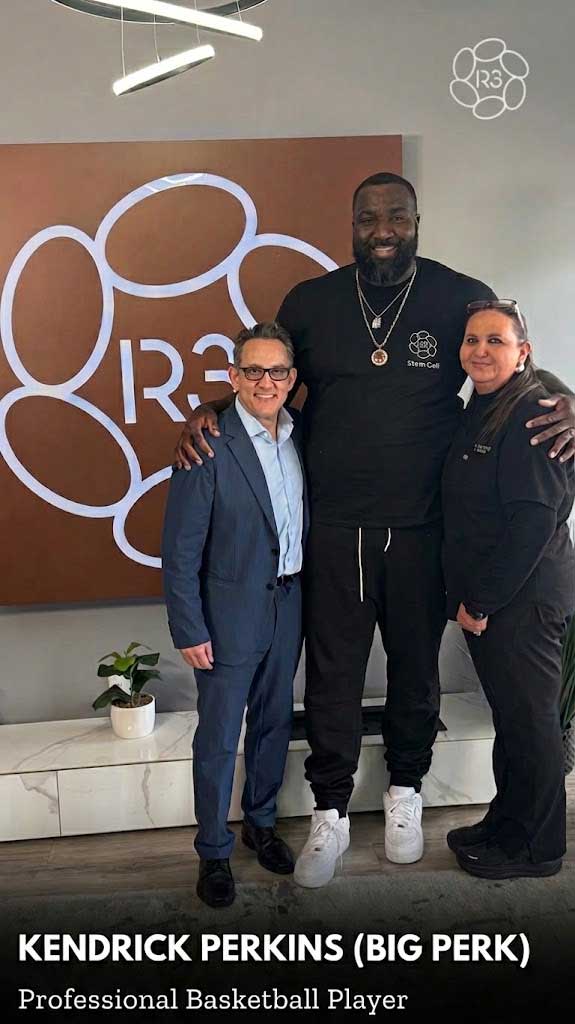
Brand Ambassador Gallery

Free webinar with R3 Stem Cell presented by CEO David Greene, MD, PhD, MBA, discussing stem cell therapy

Free Webinar with R3 Stem Cell

All You Need to Know About Stem Cell Therapy Presented by CEO David Greene, MD, PhD, MBA!

Success Stories

Loading playlist…

The USA Stem Cell Leader Offers Procedures In 8 Countries Including

Call to schedule your free consultation at over 80 centers worldwide!

Disclaimer

Stem cell therapy is considered experimental and is regulated by the U.S. Food and Drug Administration (FDA), but it is not FDA-approved. R3 Stem Cell does not offer stem cell therapy as a cure for any medical condition. No statements made on this site have been evaluated or approved by the FDA. This site does not provide medical advice. All content is for informational purposes only and is not a substitute for professional medical consultation, diagnosis, or treatment. Reliance on any information provided by R3 Stem Cell, its employees, others appearing on this website at the invitation of R3 Stem Cell, or other visitors to the website is solely at your own risk. R3 Stem Cell does not recommend or endorse any specific tests, products, procedures, opinions, or other information that may be mentioned on this website. R3 Stem Cell is not responsible for the outcome of your procedure. The FDA considers stem cell therapy experimental at this point.

Copyright © 2017-2026 R3 Stem Cell. All Rights Reserved.