
Call to Schedule Free Consultation at Over 80 Centers Worldwide!


BLOG

Blogs

Medical illustration comparing an osteoarthritic knee joint with degraded cartilage to a healthy knee joint with normal smooth cartilage thickness.

NK Cell Therapy for Viral Infections: Does It Work?

When patients think of advanced cellular therapies, oncology and regenerative medicine for joint issues often dominate the conversation. However, one of the most exciting frontiers in medical science is the application of cellular immunotherapy to target chronic, hard-to-treat viral infections. In a recent medical discussion,...

Read More
Medical illustration comparing an osteoarthritic knee joint with degraded cartilage to a healthy knee joint with normal smooth cartilage thickness.

Can Exosomes Regrow Knee Cartilage? What the Research Actually Shows

For millions of individuals living with knee osteoarthritis, daily life is often defined by pain, stiffness, and a gradual loss of mobility. Traditional treatments—such as nonsteroidal anti-inflammatory drugs (NSAIDs), corticosteroid shots, or hyaluronic acid injections—manage symptoms but fail to stop the structural breakdown of joint...

Read More
A smiling, curly-haired middle-aged woman sitting in a wheelchair on an outdoor paved path, reflecting positive functional improvements from multiple sclerosis treatment.

Can stem cells improve multiple sclerosis symptoms?

Multiple Sclerosis (MS) is a chronic, often debilitating autoimmune condition where the body’s immune system mistakenly attacks the central nervous system. Specifically, it destroys the myelin sheath—the protective coating surrounding nerve fibers—disrupting communication between the brain and the rest of the body. While conventional pharmaceuticals...

Read More
A laboratory technician in a sterile gown and blue gloves using a pipette to add a pink cell culture media solution to a multi-well tissue culture plate during stem cell processing.

What Type of Stem Cells Are Used for Clinical Treatments?

Anyone researching stem cell therapy quickly runs into a confusing mix of terminology — embryonic, pluripotent, multipotent, mesenchymal, hematopoietic — often used loosely or interchangeably in marketing materials. That confusion isn’t just an academic problem. The type of stem cell used in a given treatment...

Read More
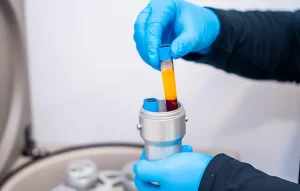
A medical laboratory researcher wearing blue gloves and safety glasses using a pipette to transfer a red liquid sample into a test tube for stem cell analysis.

What Conditions Respond Best to Stem Cell Therapy? An Evidence-Based Guide

Regenerative medicine has progressed from an experimental frontier to an established clinical option for individuals facing chronic, degenerative, and unmanageable health conditions. As cellular therapies become more widely available globally, patients and families frequently ask which specific conditions show the most consistent clinical outcomes and...

Read More
3D medical illustration showing a stem cell injection into a knee joint affected by arthritis to stimulate cartilage repair and reduce inflammation.

Is Intrathecal Stem Cell Therapy Safe? Clinical Evidence and Patient Safety Guide

For patients and families navigating the complexities of neurological disorders or neurodevelopmental conditions, evaluating modern regenerative medicine can evoke both hope and caution. When researching delivery methods for these targeted therapies, one specific term frequently emerges: intrathecal administration. Because neurological repair requires direct access to...

Read More
An abstract medical illustration depicting stem cell therapy, showing a syringe injecting a stream of glowing blue cells that flow into the torso of a translucent blue human silhouette against a dark blue grid background.

Stem Cell Therapy Side Effects and Risks: A Patient’s Guide

If you’re exploring stem cell therapy as a treatment option, understanding the potential risks and side effects is an essential part of making an informed decision. While regenerative medicine continues to evolve, data from thousands of procedures offers a clearer picture of what patients can...

Read More

Disclaimer

Stem cell therapy is considered experimental and is regulated by the U.S. Food and Drug Administration (FDA), but it is not FDA-approved. R3 Stem Cell does not offer stem cell therapy as a cure for any medical condition. No statements made on this site have been evaluated or approved by the FDA. This site does not provide medical advice. All content is for informational purposes only and is not a substitute for professional medical consultation, diagnosis, or treatment. Reliance on any information provided by R3 Stem Cell, its employees, others appearing on this website at the invitation of R3 Stem Cell, or other visitors to the website is solely at your own risk. R3 Stem Cell does not recommend or endorse any specific tests, products, procedures, opinions, or other information that may be mentioned on this website. R3 Stem Cell is not responsible for the outcome of your procedure. The FDA considers stem cell therapy experimental at this point.


Copyright © 2017-2026 R3 Stem Cell. All Rights Reserved.