Call to Schedule Free Consultation at Over 80 Centers Worldwide!

Find COPD Relief with Stem Cell Therapy
For Your Free Consultation, Call Us Today at: (844) GET-STEM

Free Download: Stem Cell Therapy for COPD

Please fill out the form below to receive the guide

Advanced Stem Cell Therapy for Effective COPD Relief

Every day,R3 Stem Cell receives inquiries worldwide from individuals asking ifstem cell therapy can help withCOPD.Spoiler alert:it can help significantly! In this guide, we’ll go over the basics of howstem cells work to improvelung function, the latestresearch findings, and what to expect from aregenerative treatment.

COPD: A Significant Global Health Issue

Chronic obstructive pulmonary disease (COPD) is a worldwide epidemic, affecting over 200 million people and causing more than three million deaths annually. According to the World Health Organization (WHO), COPD is now the third leading cause of death globally, following heart disease and cancer. Over the next 20 years, the WHO predicts that COPD-related mortality will more than double.

COPD is defined by chronic inflammation of the airways and progressive destruction of lung tissue, often triggered by cigarette smoking.

Unfortunately, aside from supplemental oxygen and smoking cessation for continuing smokers, there are no proven treatments to extend survival in COPD patients or fully restore lost lung function.

Take a Breath of Relief – Call (844) GET-STEM Today

Why Does COPD Develop?

Smoking is by FAR the most common reason people develop COPD. Another factor, a hereditary condition calledalpha-1 antitrypsin (AAT) deficiency, may also cause lung damage and lead to COPD.

Smoking and COPD Risk

COPD is usually caused bysmoking, which accounts for as many as8 out of 10 COPD-related deaths. However,1 out of 4 Americans with COPD has never smoked cigarettes.

Mounting evidence shows thatCOPD progression can slow ifat-risk patients quit smoking.Lifelong smokers have a50% probability of developingCOPD during their lifetime. More importantly,smoking cessation cancut the risk of developingCOPD by about half.

How Does COPD Affect the Lungs?

The exact biological mechanisms causingemphysema andairway remodeling inCOPD are not fully understood. One leading theory, the “inflammatory hypothesis,” suggests that in genetically susceptible individuals,lung inflammation—triggered by factors likeair pollution andcigarette smoke—changes from a “normal” response to a chronic, abnormal state.

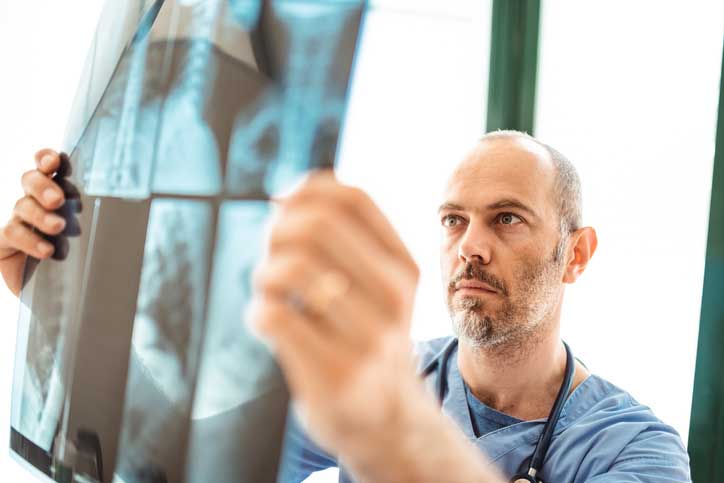
Doctor examining chest x-ray scan for copd diagnosis

Key Changes in COPD

Chronic inflammation leads to structural and functional changes, including:

These changes decrease the airways’ ability to stay open during exhalation, leading todifficulty breathing.

Interestingly, even after theenvironmental trigger (likecigarette smoke) is removed, the abnormalinflammatory response in the airways may persist. Former smokers often continue to displayairway inflammation despite smoking cessation.

Discover If Stem Cell Therapy is Right for You – (844) GET-STEM

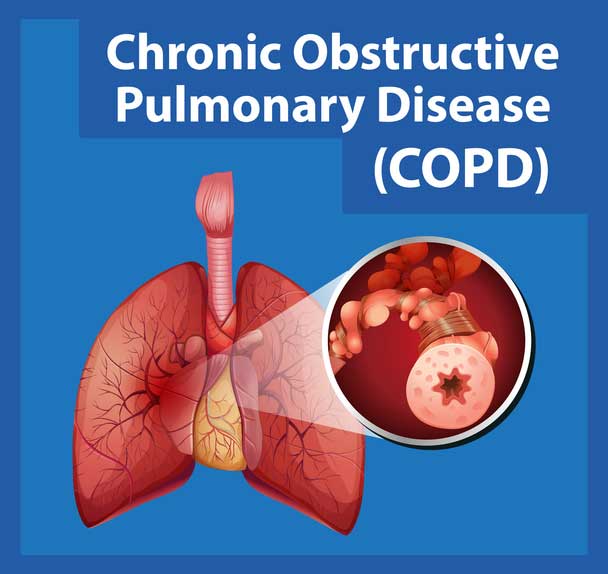
Medical diagram showing human lungs affected by chronic obstructive pulmonary disease

Traditional Treatments for COPD

Themanagement of COPD includes multiple approaches, such asprimary and secondary prevention,early detection, staging theseverity of the disease, assessingreversibility withbronchodilators andinhaled corticosteroids,chronic pharmacotherapy,pulmonary rehabilitation, and treating associatedcomorbidities.

In cases whererespiratory failure is detected,long-term oxygen therapy is commonly prescribed. For some patients, especially those withemphysema,lung surgery options, such aslung volume reduction surgery, may be considered.

Medications for COPD Treatment

Medications used inCOPD therapy may include:

These medications can reduceairflow obstruction, lower thefrequency of exacerbations, and improve thequality of life for patients. However, none of thesetreatmentscanhalt the progression ofCOPD or significantly reduce themortality rate.

Start Your COPD Recovery Journey – Dial (844) GET-STEM

Senior man holding chest experiencing severe copd breathing difficulty

Stem Cell Treatment for COPD

If a new technology such asmesenchymal stem cellandexosome therapy could either reverse COPD or stop the progression, it would and should become first line therapy. Aregenerative therapy that can initiate restoration of lung function and is a safe option should receive consideration.

Currently, mostCOPD treatments focus onsymptom relief but do not prevent disease progression or regenerate thelung structure andfunction. However, recent research suggests thatstem cells can achieve these therapeutic goals.

Notable Clinical Studies on Stem Cell Treatment

One of the largest clinical trials, conducted byWeiss et al., included62 patients withCOPD. These patients received four monthly infusions of eitherumbilical cord-derived mesenchymal stem cells (MSCs) or a placebo and were followed over two years. The study showed thatMSC infusions were well-tolerated, with no serious or clinically significant adverse effects. Additionally, patients receivingMSCs experienced astatistically significant decrease inC-reactive protein (CRP) one month after the first infusion and throughout the study, althoughlung function tests andquality-of-life scores did not show significant changes.

In a 2009 study byStessuk et al.,intravenous stem cells were administered toCOPD patients, showing improvements inlung function, slowertissue degeneration, enhancedclinical condition, and betterquality of life, with no reported side effects. This treatment also led to increasedCluster of Differentiation 31 (CD31) markers, indicating aprotective effect andhealing response fortissue damage.

A 2020 study in Vietnam byLe Thi Bich et al. administeredumbilical cord-derived MSCs (UC-MSCs) to 20COPD patients, with each patient receiving one infusion of1.5 million stem cells per kilogram. The study found improvements after six months, including reducedCRP levels, lowerexacerbation rates, and a slight increase in the6-minute walk test (6MWT) score, particularly for stage D patients. The researchers concluded thatsystemic UC-MSC administration appears safe formoderate-to-severe COPD patients and can significantly improvequality of life.

A 2021 case report, also from Vietnam, investigatedautologous adipose-derived stem cells in a57-year-old male with long-standingCOPD who had quit smoking after 15 pack-years. He received oneIV infusion initially, followed by another at six months. Hisdyspnea andquality of life showed improvement at six and twelve months, and the6MWT score increased over time. TheCRP level remained mostly unchanged, whilepulmonary function showed a slight improvement. The patient experienced no acute exacerbations throughout the one-year follow-up. At twelve months, achest CT revealed a slight increase ininhaled total lung volume, with no significant change in theemphysema index.

If you are ready to get started with seeing if you are a good candidate for stem cell therapy for COPD, call us now at (844) GET-STEM.

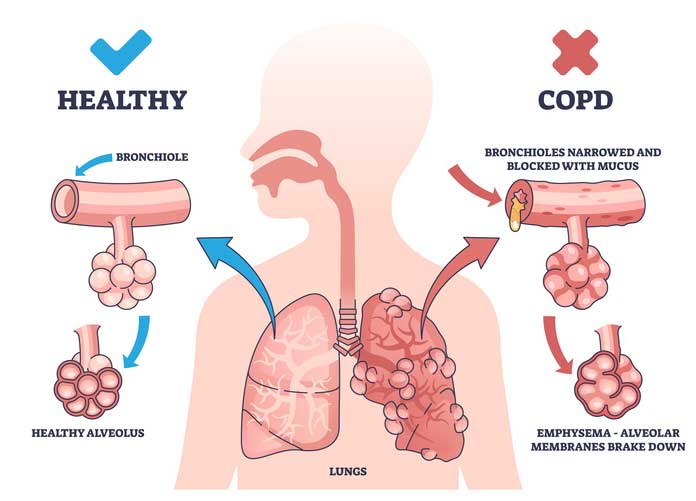
Comparison diagram showing healthy lungs versus copd damaged airways

Why Doesn’t R3 Stem Cell Use A Person’s Own Stem Cells for COPD?

R3 previously offeredautologous therapies, using a patient’s ownbone marrow oradipose stem cells. However, because thesestem cells age along with the individual, they tend to beless active, especially inolder COPD patients.

Age-related factors, includingoxidative stress, shortenedtelomere length,DNA damage, disease, and long-term medication use, impair thetherapeutic effectiveness ofautologous stem cells for treatingCOPD.

In contrast, neonatal tissue-derived stem cells from umbilical cord sources present a more youthful genotype and phenotype, providing enhanced anti-inflammatory and immunomodulatory efficacy.

Due to the superior results observed withumbilical cord stem cells,R3 Stem Cell now exclusively usesdonor stem cells, offering a more effectiveregenerative solution forCOPD patients.

Get Personalized COPD Treatment Advice – Dial (844) GET-STEM

How Do Stem Cells and Exosomes Work for the Lungs?

Stem cells andexosomes support the body through various mechanisms. Importantly, they donot integrate into a patient’sDNA or engraft with existing cells. Instead, they work through these targeted actions:

Additionally,stem cells release a wide variety ofmolecules into theextracellular environment. These includeextracellular vesicles,lipids,free nucleic acids, andsoluble proteins, which play vital roles intissue repair. Along withmesenchymal stem cells (MSCs) forlung disease treatment,R3 Stem Cell also providesexosomes that aid inextensive cell-to-cell communication crucial forlung tissue repair andregeneration.

To learn more or to speak with our stem cell specialists for COPD call us today at (844) GET-STEM.

Where Do the Stem Cells and Exosomes Come From?

R3 Stem Cell’s regenerative biologics are derived fromumbilical cord tissue donated after aplanned C-section. Neither the baby nor the mother is harmed during this procedure. Whileumbilical cord tissue is typically discarded, it is repurposed here if themother passes rigorous screening tests mandated by theFDA and other global regulatory agencies.

Once collected, the tissue undergoes careful processing to producehigh-quality stem cells andexosomes under strict compliance with theFDA andcGMP standards, ensuring top safety and efficacy forlung therapy.

Stem Cell-Derived Exosomes

AtR3 Stem Cell’s Centers of Excellence worldwide,umbilical cord stem cell-derived exosomes are used alongsideumbilical cord stem cells to enhance therapeutic outcomes.Exosomes arelipid-bound vesicles (acellular) produced by cells and contain an array ofgrowth factors,cytokines,mRNA, and otherproteins.

These exosomes are highly effective incell-to-cell communication and are particularly useful forreducing inflammation. Once absorbed by recipient cells, they act as shuttles, transferringnucleic acids andproteins to other cells, allowing formolecule transport across both close and distant cells. Generally, these released proteins are criticalregulators of intracellular communication.

Get Started on Your Path to COPD Relief – (844) GET-STEM.

Smiling female doctor standing with arms crossed in clinic

Therapeutic Potential of Exosomes

Exosomes can mediate many of thetherapeutic activities associated withstem cells. Notably, they have been observed to actfaster than stem cells alone, soR3 Stem Cell often combines them withstem cell therapy for a“1-2 punch” effect, optimizing patient outcomes.

Is Stem Cell Therapy Safe?

With over a decade of experience and 29,000 stem cell procedures performed globally,R3 Stem Cell has demonstrated that itsregenerative treatments are safe. Thequality control used instem cell production is exceptional, and anyside effects are generallymild andtemporary.

Possible Side Effects

Some mild, short-lived side effects includeitching,dizziness,lightheadedness,low-grade fever,chills,headache, andnausea. If anallergic reaction to amultivitamin orpreservative occurs,R3 Centers are equipped to manage it quickly with the necessary medications.

Will Stem Cells Be Rejected?

One common question is, “Will the stem cells be rejected?” The answer isno.

Mesenchymal stem cells (MSCs) do not expressmajor histocompatibility complex (MHC) antigens of theclass II subtype and contain low levels ofMHC molecules of theclass I subtype. MSCs also lackco-stimulatory molecules likeCD40,CD80, andCD86 needed for immune detection, making themlow-immunogenic and reducing the risk ofimmune rejection. Scientists refer to this as being “immunologically privileged.”

Is There a Tumor Risk?

Another common concern is, “Can stem cell therapy cause tumors?” Current research confirms that the answer isno. Themesenchymal stem cells andexosomes used inR3’s treatments have not demonstrated anytumor-forming potential. In fact, studies show they possessanti-tumor properties.

Let stem cell treatment help your COPD and to breathe freely again. Call our experienced specialists now at (844) GET-STEM.

Protocol

For over a decade,R3 Stem Cell have successfully treatedlung disease patients usingIV andnebulizer stem cell andexosome therapy.Stem cells andexosomes naturally target areas ofinflammation, which are prevalent inlung diseases. Therefore, they primarily go to thelungs but also target other areas in need of healing.

For example, if a person has bothCOPD anddiabetes, thestem cells andexosomes will also travel to thepancreas to aid in its function. There is no need to injectdirectly into the trachea, which would increaserisk without added benefit.

Active couple jogging outdoors to support healthy lung function

R3’s providers determine the appropriatestem cell dosage based on a patient’sweight andCOPD severity, generally ranging from1 to 3 million stem cells/kg. To ensureoptimal safety, treatments may be split into two or three sessions, depending on the total stem cell count required.

R3 Stem Cell’s lung disease protocols are founded on the latest research and best practices developed over the past decade, ensuring each patient receives safe, effective care. Safety is prioritized, withbiologic products rigorously tested before use, and treatments are administered with the same care as for a family member.

Similar to clinical studies,R3 Stem Cell’s COPD outcomes have beenexceptional, with apatient satisfaction rate of 85% year-over-year. Most patients reportbetter breathing, areduced need for supplemental oxygen, andimproved mobility. While results vary between individuals,R3 Stem Cell consistently observes improvements inpulmonary function andother lab results.

Improvements may take several months to fully manifest, though some patients feel better within the first few weeks. It’s important to note thatstem cell therapy is not a cure forCOPD;repeat treatments every6 to 12 months are recommended to maintain benefits.

Sincestem cell therapy is not a permanent cure,affordability is essential.Repeat treatments can help maintain improvements inlung function. Many patients return toR3 Stem Cell everysix to eighteen months for follow-up treatments.

While clinics inColombia, China, andPanama may charge over $20,000 forlung disease treatment,R3 Stem Cell offers treatments atless than half that cost for100 million high-quality stem cells!
Begin Your Journey to COPD Relief – Call (844) GET-STEM.

R3 Stem Cell’s Experience and Innovation

For the past decade,R3 Stem Cell Centers across six countries have performed over 29,000 regenerative procedures, including hundreds forCOPD andpulmonary fibrosis. Thepatient satisfaction rate across all conditions treated is85%.

R3 Stem Cell prioritizessafety, effectiveness, andaffordability. Internationally,Intellicell technology is used, culturing the mostactive mesenchymal stem cells to create what R3 calls the “smartest” stem cells available.

Schedule a FREE Consultation

R3 Stem Cell offers free consultations to help individuals determine ifregenerative therapy is right for theirCOPD. Call +1 (844) GET-STEM or+1 (480) 808-7057 to schedule your consultation today!

References

Disclaimer: This guide’s education does not constitute medical advice. The USA FDA considers stem cell therapy experimental. Any claims made in the Guide refer to procedures performed outside the USA.

Brand Ambassador Gallery

Free webinar with R3 Stem Cell presented by CEO David Greene, MD, PhD, MBA, discussing stem cell therapy

Free Webinar with R3 Stem Cell

All You Need to Know About Stem Cell Therapy Presented by CEO David Greene, MD, PhD, MBA!

Success Stories

The USA Stem Cell Leader Offers Procedures In 8 Countries Including

Call to schedule your free consultation at over 80 centers worldwide!

Disclaimer

Stem cell therapy is considered experimental and is regulated by the U.S. Food and Drug Administration (FDA), but it is not FDA-approved. R3 Stem Cell does not offer stem cell therapy as a cure for any medical condition. No statements made on this site have been evaluated or approved by the FDA. This site does not provide medical advice. All content is for informational purposes only and is not a substitute for professional medical consultation, diagnosis, or treatment. Reliance on any information provided by R3 Stem Cell, its employees, others appearing on this website at the invitation of R3 Stem Cell, or other visitors to the website is solely at your own risk. R3 Stem Cell does not recommend or endorse any specific tests, products, procedures, opinions, or other information that may be mentioned on this website. R3 Stem Cell is not responsible for the outcome of your procedure. The FDA considers stem cell therapy experimental at this point.

Copyright © 2017-2026 R3 Stem Cell. All Rights Reserved.