Call to Schedule Free Consultation at Over 80 Centers Worldwide!
Exploring the Latest Research: Stem Cell Treatment for Diabetes

Table of Contents

Diabetes affects more than 537 million adults worldwide and remains the eighth leading cause of death globally. Projections suggest that the number will climb roughly 46% over the next two decades — making durable, effective treatments one of medicine’s most pressing priorities.

Conventional management with insulin, metformin, and lifestyle changes helps millions, but does not address the underlying cellular dysfunction driving the disease. That gap has made stem cell therapy an increasingly active area of clinical research — and a growing option for patients who haven’t achieved adequate control through standard care.

A recently published meta-analysis in Diabetologia brings together the strongest clinical evidence to date on this question. Here is what it found.

The Meta-Analysis: Study Design and Patient Population

The Diabetologia meta-analysis synthesized data from 13 randomized controlled trials (RCTs) enrolling a combined 507 patients with either Type 1 or Type 2 diabetes.

All trials were randomized: participants were assigned by chance to either the stem cell treatment group or a control group. Control participants continued standard medications but received no active stem cell intervention — making it possible to attribute observed changes directly to the therapy.

Stem Cell Sources Studied

Umbilical cord mesenchymal stem cells are notable for their potent anti-inflammatory and immune-modulating properties, and are frequently used clinically due to their availability and tolerability.

Key Clinical Outcomes

HbA1c Reduction

Hemoglobin A1c is the primary long-term marker of blood sugar control. Across all 13 trials — without exception — stem cell therapy produced a statistically significant HbA1c reduction in the range of 20–30% over 12 months. This magnitude goes well beyond minor fluctuation and is clinically meaningful.

Reduced Insulin Requirements

Several patients in the treatment groups reduced their insulin doses; in some cases, they discontinued insulin entirely. For insulin-dependent patients, this is a significant quality-of-life change and a sign of improved pancreatic function or insulin sensitivity.

Lower Post-Meal Blood Sugar

Participants also showed reductions in postprandial (post-meal) blood glucose — the spike that occurs after eating and is a key driver of long-term diabetic complications when poorly controlled. Patients with diabetic neuropathy and related complications may particularly benefit from improved sustained glucose control.

Safety Profile

No serious adverse events were reported across any of the 13 trials over one year of follow-up. This consistent safety signal across diverse populations and stem cell sources is important for patients and clinicians evaluating risk-benefit profiles. For a broader look at stem cell therapy safety, R3 Stem Cell has published additional resources.

Does It Work for Both Type 1 and Type 2 Diabetes?

Yes. The trials included patients with both Type 1 and Type 2 diabetes, and improvements were observed across both groups.

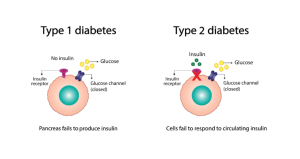
In Type 2 diabetes, stem cells are thought to improve insulin sensitivity and reduce chronic inflammation, disrupting glucose metabolism.

In Type 1 diabetes, an autoimmune condition, evidence suggests stem cells may modulate the immune response attacking insulin-producing beta cells, potentially preserving or partially restoring their function.

Stem cell therapy is not currently a cure for either form. However, the degree of metabolic improvement seen in these trials is meaningful and may substantially reduce medication dependence and slow complication progression. For patients wondering about diabetes symptoms and how they map to treatment candidacy, R3 Stem Cell provides educational resources on both conditions.

Secondary Diabetic Complications

Beyond blood sugar control, diabetic complications affect nearly every organ system over time:

Diabetic neuropathy — nerve damage causing pain, numbness, or weakness, typically in the feet and hands

Kidney disease — damage that can progress to renal failure

Erectile dysfunction — a common but underreported vascular and nerve complication

Stroke risk — elevated in poorly controlled diabetes

Research published by R3 Stem Cell found statistically significant reductions in these secondary complications following umbilical cord stem cell therapy. While this data comes from a single-institution study and should be interpreted alongside the broader literature, it adds to the growing picture of stem cell therapy’s systemic effects beyond glycemic control.

What This Means for Patients

The Diabetologia meta-analysis is one of the most comprehensive evaluations of stem cell therapy for diabetes to date. The consistency of results across 13 independent trials — covering different stem cell sources, patient populations, and geographic locations — strengthens confidence in the signal.

Patients who may be candidates for evaluation include those with:

Type 1 or Type 2 diabetes with suboptimal control despite conventional treatment

Significant insulin dependence, they wish to reduce

Established complications such as neuropathy or kidney disease

Interest in evidence-based regenerative approaches as a complement to standard care

R3 Stem Cell is among the organizations actively offering stem cell therapy consultations in this space, with over 28,000 procedures performed across 80 centers in eight countries. Patients can learn how to choose the right stem cell clinic and review what to expect before pursuing treatment.

Important Considerations

While the evidence is encouraging, several caveats are worth noting:

Most trials followed patients for 12 months; longer-term durability data are still emerging.

Sample sizes across individual trials were modest; larger phase III trials would further solidify the evidence base.

Mechanisms of action are still being studied. A useful overview is available on how stem cell therapy works .

Stem cell therapy for diabetes is not yet a standard of care in most countries and is generally considered investigational or complementary. Patients should review FDA regulations on cell therapies for context.

Patients should approach any treatment decision with full disclosure to their existing care team. Resources on what to expect from stem cell therapy and top reasons to consider it can help inform that conversation.

Frequently Asked Questions

Can stem cell therapy cure diabetes?

Not currently. The clinical evidence shows meaningful improvement in blood sugar control, reduced insulin requirements, and fewer complications — but stem cell therapy is not yet classified as a cure for Type 1 or Type 2 diabetes. It is best understood as a complementary treatment that may significantly reduce disease burden alongside conventional care.

Which type of stem cells are most commonly used for diabetes treatment?

The majority of trials have used umbilical cord-derived mesenchymal stem cells (UC-MSCs), which made up six of the thirteen studies in the Diabetologia meta-analysis. Bone marrow and adipose-derived stem cells have also shown positive results. UC-MSCs are currently the most widely used due to their availability, safety profile, and anti-inflammatory properties.

Is stem cell therapy for diabetes safe?

Based on the available clinical data, yes — none of the 13 randomized trials in the Diabetologia meta-analysis reported serious adverse events over 12 months of follow-up. However, long-term safety data beyond one year is still limited, and patients should consult a qualified provider to assess individual risk. Learn more about the risk-benefit profile of mesenchymal stem cell therapy.

Conclusion

The accumulating clinical evidence for stem cell therapy in diabetes is substantive and increasingly consistent. A meta-analysis of 13 randomized controlled trials found meaningful reductions in HbA1c, insulin requirements, and post-meal blood sugar across both Type 1 and Type 2 patients, with no serious safety concerns. Secondary complications also appear to respond favorably in emerging research.

For patients and families managing the daily burden of diabetes, this evolving field warrants serious attention and an informed conversation with qualified medical providers. To explore whether you or a loved one may be a candidate, R3 Stem Cell offers free consultations through its network of centers across the US and internationally.

References:

  • Diabetologia (2024 Meta-analysis on MSC efficacy).
  • Global Diabetes Statistics: International Diabetes Federation (IDF).
  • R3 Stem Cell Internal Clinical Data.

Contact Us

Stem cell therapy for diabetes is not yet a standard of care in most countries and is generally considered investigational or complementary. Patients should review FDA regulations on cell therapies for context.

Why Dr. Hector is "Passionate" About the Word "Natural"

Consent alone is not sufficient. Donor mothers also undergo comprehensive medical screening, which typically includes:

What Does the Bioethics Community Say?