Call to Schedule Free Consultation at Over 45 Centers Worldwide!

Natural Killer (NK) Cells vs. T Cells: The Biological Difference in Immunotherapy

Table of Contents

In the world of advanced medicine, the term “immunotherapy” has become a beacon of hope for patients facing chronic and life-threatening conditions. However, not all immune cells are created equal. As Dr. Hector, our immunotherapy specialist in Tijuana, points out, there is a profound biological and functional difference between Natural Killer (NK) cells and T cells.

Understanding these differences is key to knowing why NK cell therapy is often the preferred “first responder” in regenerative and anti-cancer protocols. At R3 Stem Cell, we leverage these “natural” assassins to provide a faster, safer, and more efficient immune response for our patients.

The Core Difference: Innate vs. Adaptive Immunity

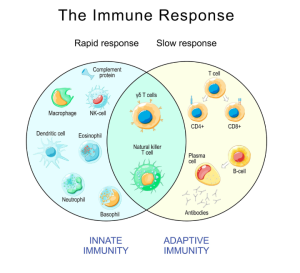
The human immune system is divided into two primary branches: Innate and Adaptive. NK cells and T cells represent the elite forces of these respective branches.

Natural Killer (NK) Cells: The "Natural" First Responders

NK cells are part of the innate immune system. As their name suggests, their ability to identify and kill “bad” cells (such as tumor cells or virally infected cells) is natural and immediate.

No "Training" Required: Unlike other cells, NK cells do not need to have encountered a pathogen before to recognize it as a threat.

Rapid Response: Because they are "pre-programmed" to hunt, they respond much faster than T cells.

Universal Recognition: They scan for the absence of "self" markers. If a cell looks abnormal or stressed, the NK cell attacks.

T Cells: The "Educated" Specialists

T cells are the backbone of the adaptive immune system. While incredibly powerful, they are much more “complicated,” as Dr. Hector explains.

Required "Education": T cells must be "taught" or "primed" to recognize a specific pathogen. They need to "see" a wanted poster of the enemy before they can attack.

Delayed Response: The process of learning, duplicating (clonal expansion), and deploying can take days or even weeks during the first encounter with a threat.

High Specificity: While slow to start, once a T cell is activated, it is highly specific to a single target.

Comparison Table: NK Cells vs. T Cells

Feature

Natural Killer (NK) Cells

T Cells (CD8+ / CD4+)

Immune Branch

Innate (Rapid Response)

Adaptive (Targeted Response)

Activation

Natural / Spontaneous

Requires Antigen Presentation

Prior Exposure

Not required

Required (Must “learn” the enemy)

Speed

Immediate (Hours)

Slow (Days/Weeks)

Memory

Limited

Strong (Long-term protection)

Primary Target

Stressed, Infected, or Tumor Cells

Specific Pathogens/Antigens

Why Dr. Hector is "Passionate" About the Word "Natural"

The word natural in Natural Killer cells reflects a biological elegance. In a clinical setting, such as our treatment protocols in Mexico, this “natural” ability translates to several patient benefits:

1. Safer "Off-the-Shelf" Application

Because NK cells don’t use the same complex recognition systems as T cells, allogeneic (donor) NK cells carry a much lower risk of Graft-versus-Host Disease (GvHD). This makes them safer for use in a wide variety of patients without the need for perfect genetic matching.

2. Overcoming "Immune Evasion"

Many “bad” cells, particularly in heart disease or cancer, try to hide from the immune system by removing the “flags” that T cells look for. NK cells actually prefer this—they are specifically designed to kill cells that are trying to hide.

3. Synergistic Healing

In regenerative medicine, NK cells work alongside stem cell therapy to clear out the “cellular debris” and senescent cells that cause chronic inflammation. This creates a clean environment for new tissue to grow, which is essential for treating:

Clinical Applications: Beyond the Immune System

While T cells are often the focus of “CAR-T” cancer therapies, NK cells are proving to be versatile tools for a broader range of degenerative and autoimmune conditions.

Autoimmune Regulation

For patients with Psoriasis or Rheumatoid Arthritis, the immune system is overactive. NK cells play a regulatory role, helping to “dampen” the overactive T cell response and bring the body back into a state of homeostasis (balance).

Chronic Respiratory Support

In conditions like COPD, chronic lung inflammation is often exacerbated by persistent low-level viral or bacterial presence. NK cells provide a rapid defense to clear these threats, allowing the regenerative properties of stem cells to focus on tissue repair.

FAQs: NK Cells vs. T Cells

Can I have both NK cell and T cell therapy?

While most current protocols focus on one or the other, researchers are exploring how these “complementary partners” can work together. NK cells provide the immediate “front line” defense, while T cells provide the long-term memory.

Is NK cell therapy safe?

Yes. Because NK cells are a natural part of your innate defense and do not require the same grueling “priming” process as T cells, they have an excellent safety profile with minimal side effects.

How do I know if I need immunotherapy?

If you suffer from chronic inflammation, autoimmune disorders, or degenerative conditions that haven’t responded to traditional medicine, you may be a candidate. We recommend a free consultation with our experts to discuss your specific medical profile.

Conclusion: Faster, Smarter, Natural

Dr. Hector’s passion for NK cells stems from their speed and natural efficiency. In the race against chronic disease, you don’t always have weeks to wait for your immune system to “learn” how to fight. You need a force that is already prepared.

At R3 Stem Cell, we combine the natural power of NK cells with the most advanced regenerative therapies in the world.

Ready to take the next step? Visit our locations page or call us at (844) GET-STEM.

Global leader: R3 Stem Cell has performed more regenerative procedures than any other provider in the world.

Contact Us

Consent alone is not sufficient. Donor mothers also undergo comprehensive medical screening, which typically includes:

What Does the Bioethics Community Say?